
the second death
a further examination of damnatio memoriae.

This past week I posted my new format video which I was really happy with how it turned out.
If you haven’t had a chance to check it out you can view it here:
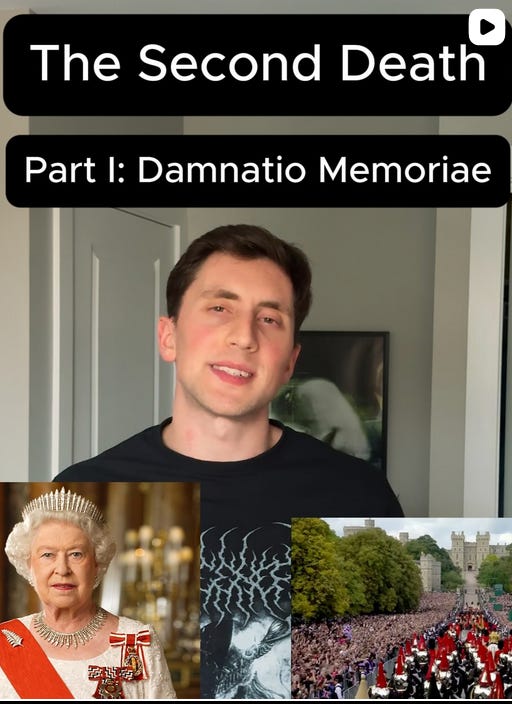
Death is something that I have had in the back of my mind since I was a young kid.
It’s an interesting predicament we are in. We know our fate, yet we try our best to run away from it as fast and as often as possible.
In times of triumph, the Roman generals typically parading through Rome. People bent the knee, flowers were thrown, trumpets were played.
Men were treated as gods in mortal form. But during these parades stood a slave in the shadows uttering the following words :
“Respice post te. Hominem te esse memento.”
“Look behind you. Remember you are only a man.”

Even in the highest moments of glory, we must remind ourselves that death is not so far behind.
But what do we do with this humbling experience? Well, I’ve thought about this for a long time, and I think we really only have 2 choices which I will be talking about today.
Cower in fear and run away from death.
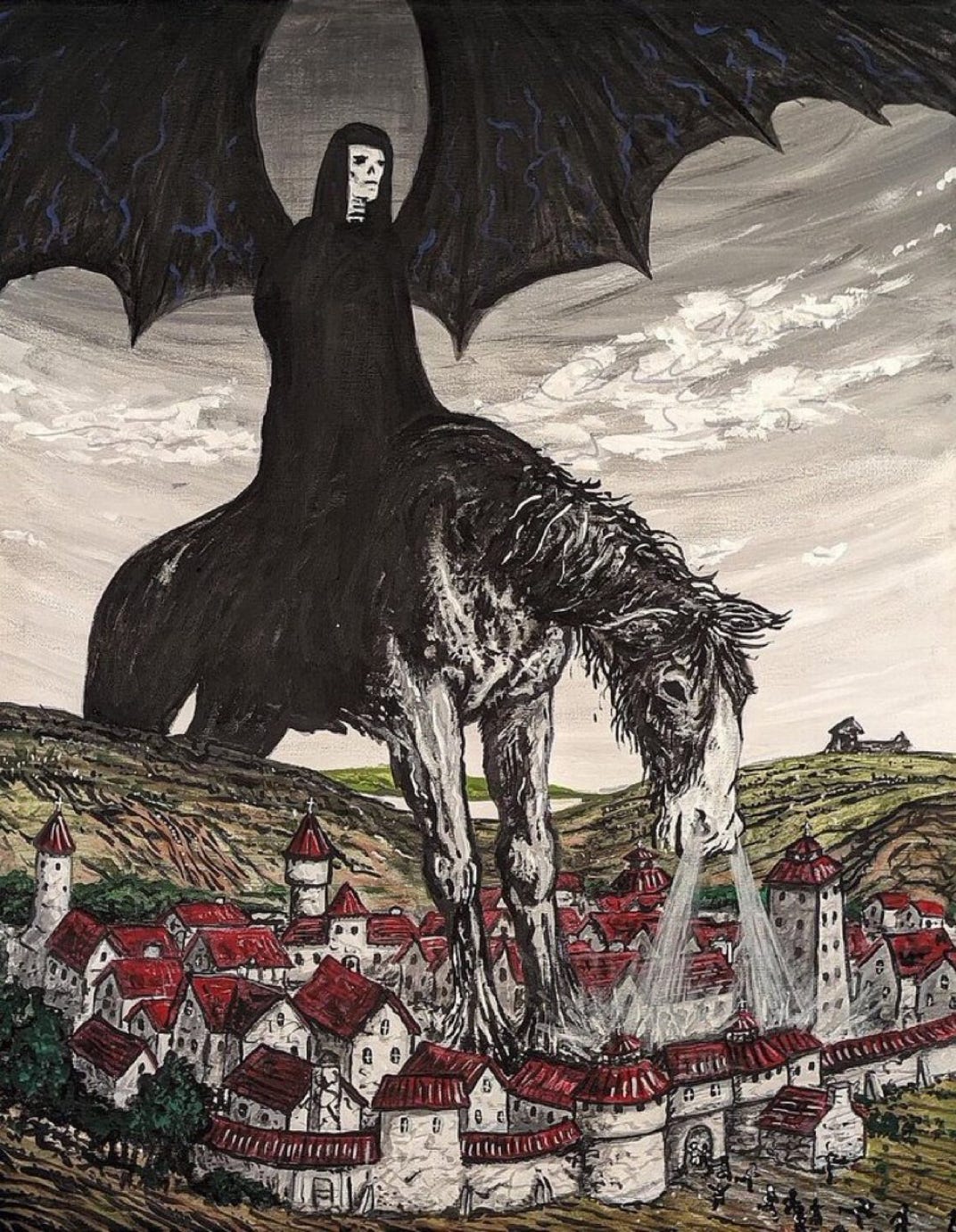
This is the most common one I see time and time again. And I want to preface that it does not mean people “literally” cower in fear. It can be projected out in many different (and subtle) ways.
As simple as making jokes of people getting old. Or fixating on aging, or even just not speaking of death (because it brings bad luck?).
This is not a new sentiment, albeit what you might see on TikTok or Instagram with the youthful focus of society.
For example in Victorian times of mourning, some people would cover the mirrors in their homes after someone died. This was because they believed that souls would become trapped in reflections. Others (in a more Dorian Grey way), could not face the mortal confrontation of existence.
But I want to go back to this youthful fixation. Because I think this is one of the main reasons why many people stay cowering in fear of death (and aging).
Statistically speaking social media is linked directly in youth life across North America, and research consistently links heavier use with worse mental-health indicators.
With the overwhelming youth population on social media, it brings the question. What is the youth learning is of importance in today’s society?
Now I don’t have a specific stat of the spread of content within each platform, and I do want to take into consideration that the algorithm plays a big part on what you consume. But anecdotally speaking, a large push (culturally), has been celebrities, sports, and entertainment.
That brings us to my main question. Do those help us deal with the concept of death?
I think not.
Which brings me to our second option we can choose with the fate that has already been sealed for us.
Accept death and find meaning.
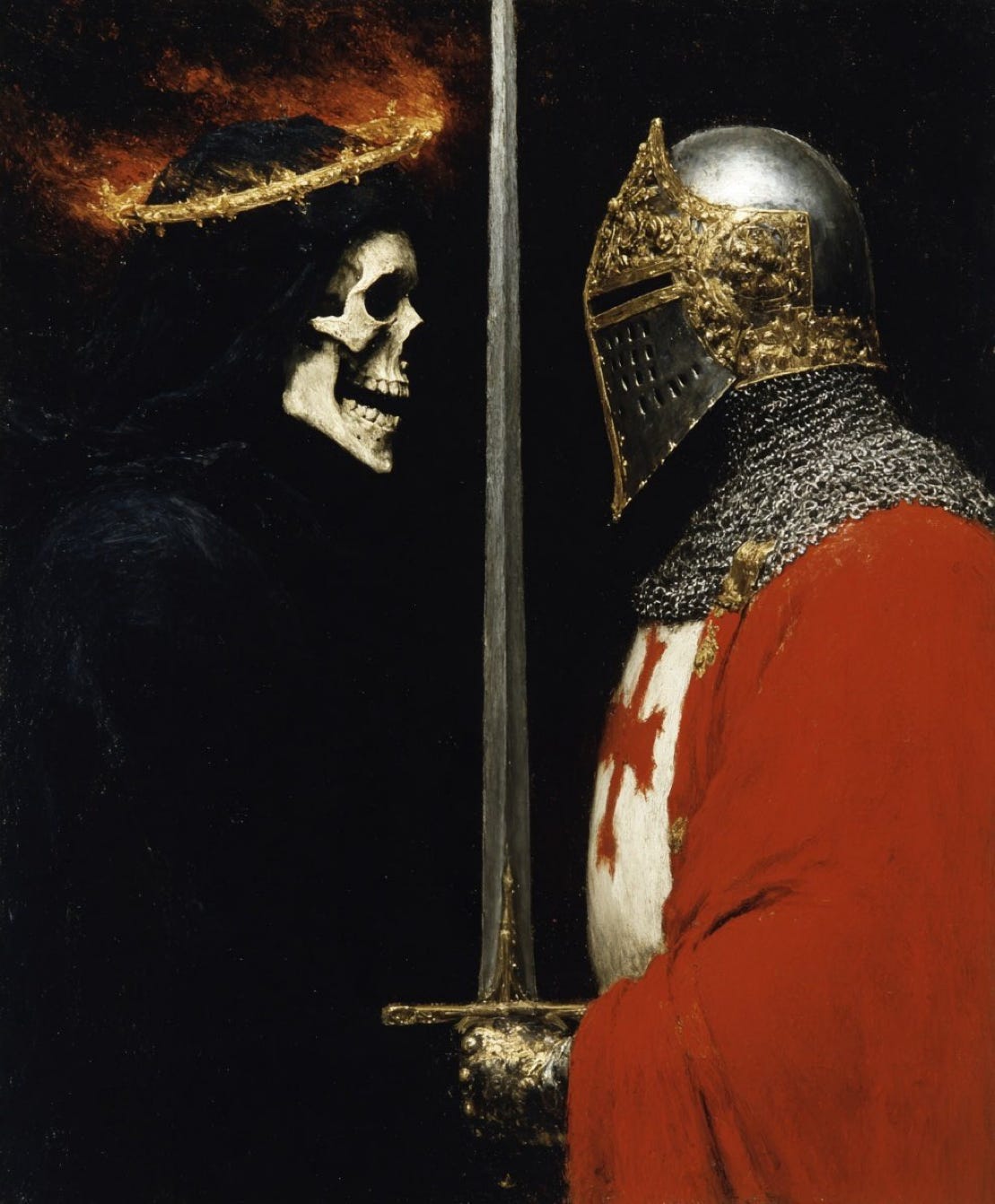
This is a road less often taken. A way that has been taught less and less as time has gone on.
In the medieval times they taught of “Ars Moriendi”. The art of dying. This was during a period after the Black Death which killed millions of people.
They treated death as a skill to be learned. Describing five temptations a dying person faces:
Lack of faith
Despair
Impatience
Pride
Greed/attachment
The central idea in this teaching is that death is a lifelong preparation. You prepare for death the way you live.
We have to remember that medieval people saw death publicly all the time. They had to bury family often, lived near graveyards and understood the shadow of death in a way modern society rarely does.
If we look at today’s society, old people are forgotten. They are invisible to the world.
I say this with conviction because I saw it first hand.
I remember being at the hospital once and an old man that was at least 80 years old, had to wait over 8 hours in the emergency room to be seen. He had brought a bucket with him because he was spitting blood. Over and over and over throughout the 8 hours I saw this man in pain, hunched over and spitting blood — waiting to be seen.
It made me grateful for what I have now, but that memory is etched in my brain that I will never forget.
And once he was finally admitted I remember walking past and he was not even given a room. He was on a stretcher in the hallway. Alone. Invisible to the world around him.
Is this how we have been taught? Is this really what society teaches us about death and our mortality? A world devoid of emotion, of any empathy to recognize those who may* be closer to death than us?
That is no world I wish to follow.
To philosophize is to learn to die. - Michel de Montaigne
The person who learns how to die learns how to live freely. And to live freely we must be in constant reminder of how fragile our lives really are. How close we are to death.
Romans would sometimes keep inside their homes:
skulls
funeral masks
reminders of mortality
Avoiding the awareness of death makes society less humane. Our modern society teaches us to ignore the reminders we should be looking at.
So choose the road less taken. Remember death. Accept it. Live with the time you still have.
Remembering death will make you kinder, more present, more grateful, and most of all, more human.